Everything You Need to Know about Digital Attribution Modeling Techniques

Everything You Need to Know about Digital Attribution Modeling Techniques:

It is essential to choose a position-based Digital attribution modeling technique with an appropriate percentage assigned to the first as well as the last interaction between the stages of awareness in an inbound strategy. Any piece of content that can bring traffic and funnel prospective clients is extremely important. It must guide the campaign through opportunity conversions. One must be able to identify the new channels for the buyers to interact, and eventually convert.
Direct Traffic in Google Analytics
The Model Conversion Tool doesn’t actually change any data or portrays different statistics in anyways. It simply tells on how much each channel has contributed to a conversion. The comparison tools look specifically at the goal conversions and E-commerce transactions from different sources.
So here are some models you can use to compare the data and works best for you:
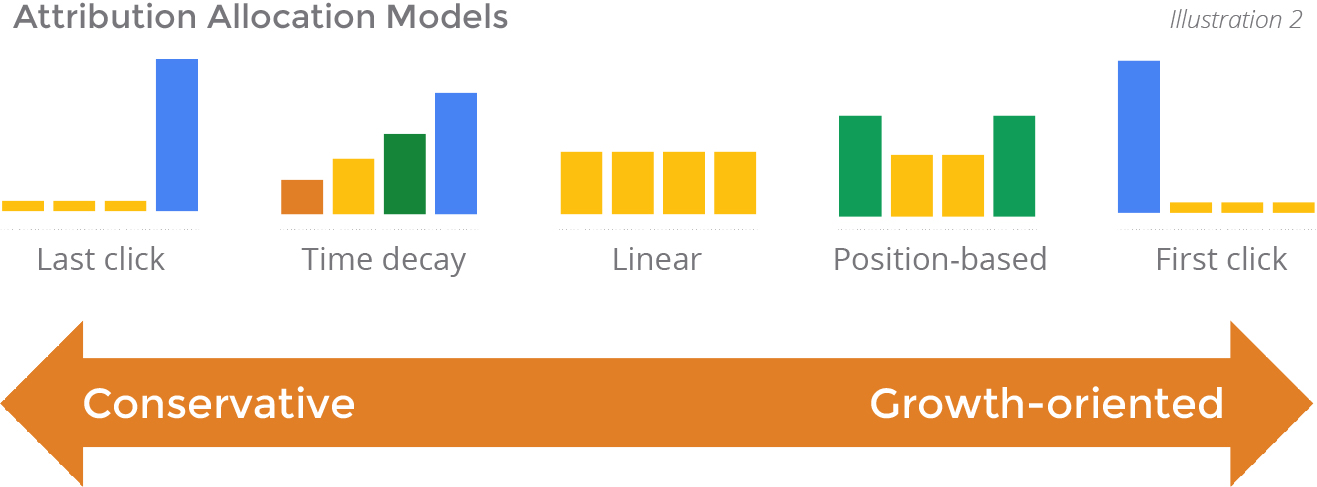
 
Digital Attribution Modeling Techniques


1. Last Non-Direct Click
This is the default program used for fulfilling daily reporting requirements. Not being so advanced in nature, this simplistic program gives credit to the last known campaign. Any effort which is entered by the user just before converting is considered. More like the last piece of marketing that convinced the user to convert. This type of model suits best for sites where the impromptu conversion can take place. For online shopping sites, this type of model suits the best, as the end buyer can frequently and quickly make conversions and not through different patterns.
2. Last Interaction
This method includes Direct; everything else is similar to The Last Non-Direct Click. However this method is often ignored, the reason being that it ignores the last effort made by the user just before converting. This attribution model is good if in case the user requires some quick statistics on the number of conversions and where the user came from most recently.
3. Last AdWorks Click
Quite simple model, this type gives conversion credit to the last AdWords campaign which the user had clicked on just before converting. AdWords is preferred since it has a clear cost for those clicks, so an exact return can be expected on the amount that is spent.
4. First Interaction
This model is all about the first click attribution. This is a good platform for new companies and websites. This can help the beginners to analyze techniques to brand itself in the market. Before conversion, it is essential for the user to know about the company, this technique helps you know about the platform from where the maximum sale conversion is taking place.
5. Linear
This model considers all the conversion supporters or all the techniques that were used by the user to interact before converting. This option is good for platforms which run on larger marketing cycles, as here is more than one place of exposure and consideration.
6. Time Decay
This is somehow similar to the Linear digital attribution modeling technique. Time Decay looks upon the marketing efforts put behind the final conversion. All the campaign efforts which lead to the final sales are considered and measured. In this type of model, however, the recent entry gets more credit whilst the old marketing campaign gets less credit. This is best for campaigns with long duration of conversion cycles.
7. Position Based
In this, the first and the last interaction receive 40% of the credit and rest is equally distributed across all the other interaction that took place in the middle. The first interaction is how the person came to know about the website and the Last Interaction is what finally closed the deal.
8. Custom
While all the models are made to assist the requirements of a business. Still if in case, the user is interested to create a custom model. Using a model as a base, you can tweak and create your own model. You can also collaborate two model functions with one superior tool.
Using these models you can check yourself if your marketing campaign is reaching the buyers properly or not. Choosing a correct attribution model in Google Analytics is essential for your business growth without putting in any extra financial input.
Author Bio-
Windsor Data Services, your one-stop destination for all you need to create a data-driven organization. Based in Zürich and Singapore, Windsor Data Services is a modern, cloud age data integration and advertising firm whose mission is to empower firms with data management and analysis tools. Connect with Facebook and Twitter for more info.
 

pravesh Maurya

Hey all, I am Pravesh Maurya, as a blogger, writer and content marketer also started to influence marketing. – One place to expand your horizon! We welcome our visitors with a huge collection of informative blogs on trending topics. Be its Finance, Insurance, Tour & Travel, Real Estate, business, shopping and Make Money Online Tips, we have got you covered!

urlwo
Digital Marketing Tips SEO Tips

The Ultimate URLWO Optimizing Guide for Higher Rankings and Traffic

Have you ever wondered why some websites climb the search results effortlessly while others seem stuck in digital obscurity? The secret often lies in the structural foundation of your site. Many site owners overlook the technical architecture that guides search engines and users alike. Understanding what is urlwo is the first step toward mastering your site’s visibility and performance. At its core, urlwo acts as a vital bridge between your content and the people searching for it. By optimizing this element, you provide search engine crawlers with a clear map of your site. This strategic approach ensures that your pages are indexed correctly and ranked for the right terms. When you prioritize this foundational layer, you unlock significant improvements in organic traffic and overall user engagement. The Evolution of URL Optimization and Where URLWO Stands The history of web architecture reveals a fascinating shift from cryptic strings to meaningful paths. In the early days of the internet, developers often used long, confusing sequences of numbers and symbols to identify pages. These static strings provided little context to both users and search engine crawlers. As search algorithms became more sophisticated, the industry moved toward semantic URL structures. This transition prioritized readability and relevance, ensuring that a URL acts as a clear indicator of the page content. Semantic URLs are now a cornerstone of effective site architecture, helping search engines categorize information more accurately. From Static Strings to Semantic URL Structures Early web design relied heavily on dynamic parameters that were difficult for humans to parse. A typical link might have looked like a random jumble of characters, offering no insight into the topic of the page. Today, we favor clean, descriptive paths that mirror the hierarchy of a website. This shift allows users to understand exactly where they are on a site just by looking at the address bar. By replacing complex IDs with descriptive keywords, webmasters can improve both user experience and search visibility. Clear, logical paths are essential for modern indexing standards. Defining URLWO in the Modern SEO Landscape When asking what is urlwo, it is best to view it as a comprehensive framework for managing site addresses. It goes beyond simple keyword insertion to encompass the entire logic of your URL architecture. This approach ensures that every link serves a specific purpose in your broader SEO strategy. Adopting a robust urlwo strategy allows you to maintain consistency across your entire domain. By standardizing how you name and organize your pages, you create a predictable environment for search engines. Ultimately, urlwo is about aligning your technical foundation with the intent of your target audience. Key Elements That Define a Strong URLWO Strategy A robust urlwo strategy serves as the foundation for better indexing and improved search visibility. By focusing on specific technical and semantic choices, website owners can significantly influence how crawlers interpret their content. Implementing these standards ensures that your site remains competitive in an ever-evolving digital landscape. Keyword Placement and Semantic Relevance Search engines analyze the words within your URL slug to understand the context of a page. Placing primary keywords near the beginning of the slug helps crawlers identify the topic quickly. Semantic relevance is achieved when the URL accurately reflects the content found on the page, creating a clear signal for both users and algorithms. Avoid stuffing your URLs with unnecessary terms that do not add value. Instead, keep the structure descriptive and concise to maintain a high level of topical authority. This practice ensures that your site architecture remains organized and easy for search engines to categorize. The Role of URL Length and Readability Maintaining an optimal URL length is vital for both user experience and ranking potential. Shorter, cleaner URLs are easier for users to read, share, and remember. A well-structured urlwo approach prioritizes simplicity, which often leads to higher engagement rates across various platforms. Excessively long strings can confuse users and may even be truncated in search engine results pages. By removing unnecessary parameters and keeping the path logical, you improve the overall accessibility of your site. Readability acts as a key factor in building trust with your audience. Using Hyphens Versus Underscores for Search Engines The technical debate regarding separators is settled by search engine guidelines that favor specific characters. It is widely recommended to use hyphens as word separators rather than underscores. Search engines treat hyphens as spaces, allowing them to distinguish individual words within your urlwo structure effectively. Conversely, underscores are often interpreted as joining characters, which can merge words into a single, unrecognizable string. Consistent use of hyphens ensures maximum compatibility with crawlers and prevents indexing errors. Adopting this standard is a simple yet effective way to optimize your site for better performance. Read More – Mistyinfo.com Blogging How URLWO Impacts Rankings, CTR, and User Trust? A well- structured web address does more than just organize files; it acts as a silent ambassador for your brand. By […]

Read More
Mistyinfo.com Blogging
Blogger Tips Digital Marketing Tips

Mistyinfo.com Blogging Strategies to Drive Traffic & Income

In today’s digital world, blogging has become a powerful way to share ideas, build influence, and earn income. Among many blogging platforms and styles, Mistyinfo.com Blogging stands out as a strategy that offers flexibility, long-term growth, and real monetization possibilities. Whether you are new to blogging or already have experience, understanding how Mistyinfo.com Blogging works […]

Read More
Convert website visitors with garage2global
Digital Marketing Tips

How to Convert website visitors with garage2global?

Getting traffic and conversion in your Business is necessary for every owner, Your site may receive hundreds, or even thousands of visitors. But when they’re not turning to leads, clients or subscribers or customers, then your digital expansion is stalled. It is the best platform where Convert website visitors with garage2global is a great solution […]

Read More