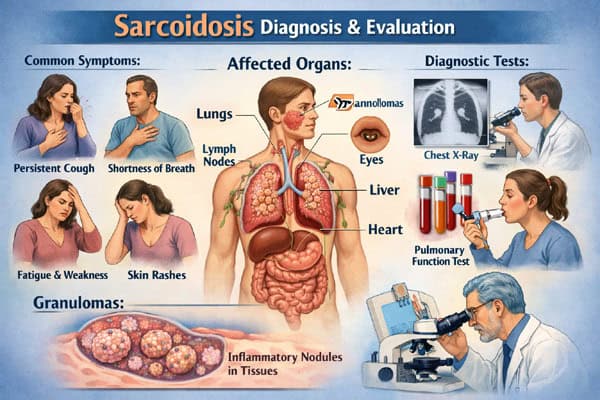
Sarcoidosis is a complex inflammatory disease that can affect multiple organs in the body, most commonly the lungs and lymph nodes. Because its symptoms often mimic other conditions, diagnosing it accurately can be challenging. Understanding the process of Sarcoidosis Diagnosis and Evaluation is essential for timely treatment and improved patient outcomes. Advanced medical institutions like Liv Hospital provide specialized diagnostic tools and expert care to ensure precise identification of this condition.
Table of Contents
Understanding Sarcoidosis
Sarcoidosis is characterized by the formation of granulomas—tiny clumps of inflammatory cells—in different parts of the body. While the exact cause remains unknown, it is believed to result from an abnormal immune response to environmental or infectious triggers in genetically predisposed individuals.
Symptoms can vary widely depending on the organs involved. Common signs include persistent cough, shortness of breath, fatigue, fever, and skin lesions. Due to this variability, a structured and thorough diagnostic approach is crucial.
Importance of Early Diagnosis
Early and accurate diagnosis helps prevent complications and allows for better disease management. Since sarcoidosis can resemble other diseases such as tuberculosis, lymphoma, or autoimmune disorders, physicians must carefully evaluate each case.
The process of Sarcoidosis Diagnosis and Evaluation involves multiple steps, combining clinical assessment, imaging studies, laboratory tests, and sometimes tissue biopsy.
Clinical Assessment
The first step in diagnosis is a detailed medical history and physical examination. Doctors assess symptoms, duration, and severity while also considering occupational exposure, environmental factors, and family history.
During the physical exam, physicians may check for:
- Enlarged lymph nodes
- Skin abnormalities
- Lung function irregularities
- Eye inflammation
This initial evaluation helps guide further testing.
Imaging Techniques
Imaging plays a vital role in identifying organ involvement. Common techniques include:
Chest X-ray
A chest X-ray is often the first imaging test performed. It can reveal enlarged lymph nodes or lung abnormalities typical of sarcoidosis.
CT Scan
A high-resolution CT scan provides more detailed images of the lungs and can detect early or subtle changes not visible on X-rays.
PET Scan
In some cases, PET scans are used to identify active inflammation and determine which organs are affected.
Medical centers like Liv Hospital utilize advanced imaging technologies to improve diagnostic accuracy and monitor disease progression.
Laboratory Tests
Blood and urine tests help assess organ function and detect markers associated with sarcoidosis. These may include:
- Elevated calcium levels
- Increased angiotensin-converting enzyme (ACE) levels
- Liver and kidney function tests
Although these tests are not definitive, they provide supportive evidence in the overall evaluation process.
Pulmonary Function Tests
Since the lungs are most commonly affected, pulmonary function tests are often conducted. These tests measure lung capacity and airflow, helping determine the extent of respiratory involvement.
Biopsy for Confirmation
A biopsy is the most definitive way to diagnose sarcoidosis. It involves taking a small tissue sample from an affected organ, such as the lungs, lymph nodes, or skin.
The presence of non-caseating granulomas in the tissue confirms the diagnosis. However, doctors must rule out other causes of granulomas, such as infections or malignancies.
Differential Diagnosis
One of the most critical aspects of Sarcoidosis Diagnosis and Evaluation is differentiating it from other conditions with similar symptoms. These may include:
- Tuberculosis
- Fungal infections
- Lymphoma
- Autoimmune diseases
Accurate differentiation ensures that patients receive the correct treatment and avoid unnecessary therapies.
Multidisciplinary Approach
Given its multi-organ nature, sarcoidosis often requires a team of specialists, including pulmonologists, dermatologists, cardiologists, and ophthalmologists. Collaborative care ensures comprehensive evaluation and management.
Institutions like Liv Hospital follow a multidisciplinary approach, combining expertise from various fields to provide personalized care for each patient.
Monitoring and Follow-Up
Diagnosis is only the beginning. Regular follow-up is essential to monitor disease progression and treatment response. This may involve repeat imaging, lung function tests, and laboratory evaluations.
Some patients experience spontaneous remission, while others may develop chronic disease requiring long-term management.
Live and Feel
To live and feel is to be present in every moment and to experience life with an open heart. It means not holding back your emotions but allowing yourself to laugh, love, struggle, and grow. When you truly live and feel, you begin to appreciate the small details of life and understand that every emotion—good or bad—adds depth and meaning to your journey.
Conclusion
Sarcoidosis is a complex condition that requires a careful and systematic approach for accurate diagnosis. The process of Sarcoidosis Diagnosis and Evaluation involves clinical assessment, imaging, laboratory tests, and often biopsy confirmation. Early detection and proper evaluation are key to preventing complications and improving quality of life.
With advanced diagnostic tools and expert medical teams, institutions like Liv Hospital play a crucial role in ensuring precise diagnosis and effective management of sarcoidosis.
Follow – https://sggreek.com for More Updates